Formal Garden Design and Installation at a Wappingers Falls Estate
Properties like this one don't come together by accident. A formal estate garden requires careful planning - symmetry, scale, plant selection, and hardscape all have to work together. When one element is off, the whole thing falls apart.
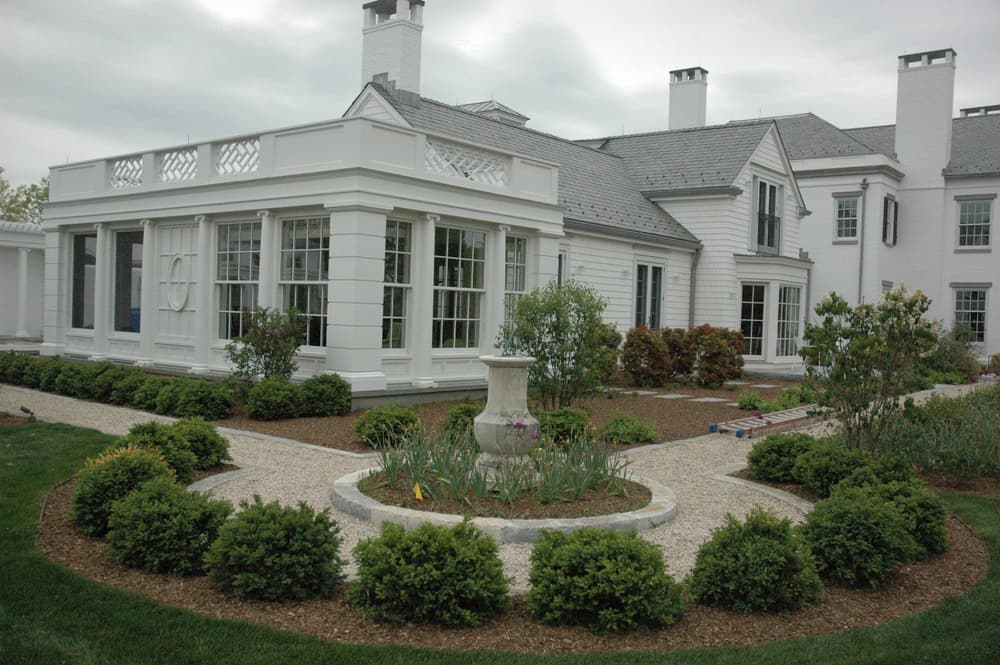
Here's what we were working with: a large, stately white colonial with a sunroom wing that demanded an equally polished exterior. The goal was to create a formal garden that felt intentional and structured, without looking stiff or overdone. That balance is harder to pull off than most people think.
We laid out a curvilinear gravel path system framing a central ornamental bed anchored by a stone pedestal. Rounded boxwood shrubs were placed in a repeating pattern throughout the beds, giving the space its formal rhythm. Fresh mulch beds, clean edging, and layered plantings - including ornamental grasses and mixed shrubs - round out the design.
What makes this type of work hold up over time is the attention to spacing and proportion. Each shrub placement was deliberate. The gravel pathways tie the whole layout together and give the garden a structured framework that ages well and stays low maintenance compared to more complex planting schemes. For estates in the Wappingers Falls area, that kind of design discipline matters - especially on a property with this much visible frontage.
Formal landscape design at this scale is a long-term investment in the property. Done right, it adds real curb presence and sets the tone for everything else on the grounds.